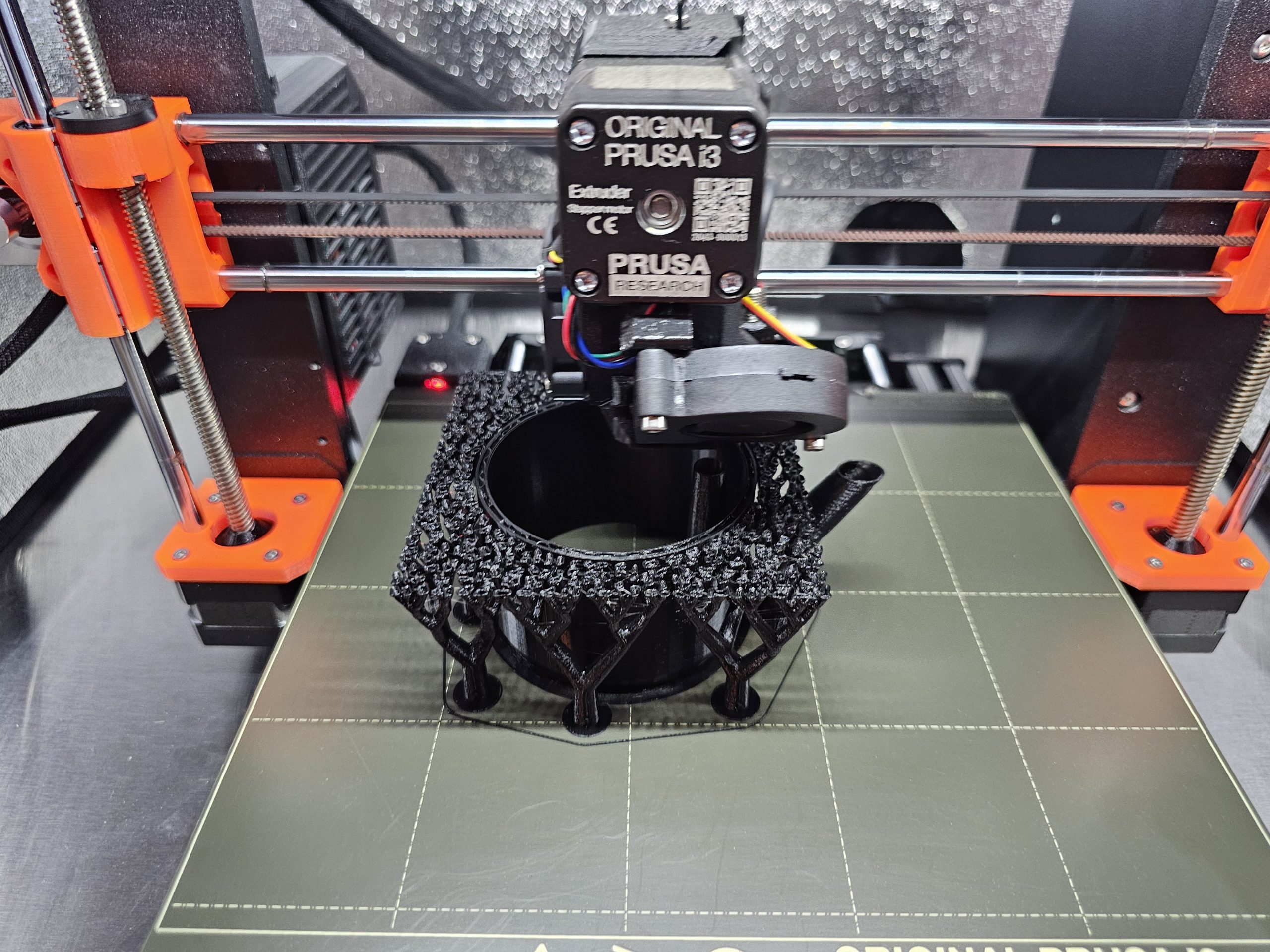
From STL File to Convention Floor: Building a 3D-Printed Cosplay Prop That Works with an Online 3D Printing Service
The file looks perfect on your monitor. Every panel line, every rivet, every surface detail is exactly where it should be. You slice it, send it to the printer, and wait.
When the finished piece comes off the build plate, something is wrong. The shapes are there. The details are present. But the prop looks like a plastic replica rather than the object it is supposed to represent.
This happens because cosplay is not about reproducing every polygon from a digital model. It is about reproducing the visual identity of an object. Those are different objectives.
What Makes a Prop Instantly Recognizable?
Strip away the tiny details from a fictional object and ask what remains. Usually the silhouette, the proportions, the signature shapes, the distinctive markings, the color relationships, and a handful of memorable details carry the weight.
Consider a sci-fi communicator from a popular franchise. The specific button layout might vary between versions, but the overall shape and the way it sits in the hand are what make it read as that device. A fantasy crown could feature elaborate filigree, yet the crown's silhouette and the arrangement of its major elements signal its identity before anyone notices the fine work.
This is a crucial insight for prop makers. A prop can contain hundreds of tiny details while still failing to resemble the reference if its major shapes are wrong. The eye registers the big picture first.
Reference Images and the Problem of the Missing Angle
Cosplay makers rarely have perfect reference material. Several screenshots, concept-art images, promotional photographs, and game renders might exist, but they almost never show every side of an object.
The front might be visible while the back remains a mystery. One game render might contradict another. Concept art often exaggerates proportions for dramatic effect. Lighting can hide or distort surface details. A prop might change subtly between scenes or game versions.
Someone producing a physical replica has to reconstruct what the reference does not show. This means making informed decisions about unseen surfaces, guessing at proportions from context, and accepting that certain details will never be known with certainty. Sometimes the back of a prop has to be invented based on what makes sense mechanically or visually.
Take a fictional weapon that appears only in a few action shots. The hero holds it at different angles, but the grip is never fully visible. The maker has to decide how the handle wraps around, where the trigger guard sits, and how the prop balances in a human hand. Those decisions become part of the final piece.
Custom Cosplay Prop 3D Printing and the Art of Making Fictional Objects Look Real
Fictional objects often contain impossible shapes, exaggerated surfaces, glowing sections, or materials that do not exist in real life. A sci-fi weapon might feature a metallic surface that shifts color depending on the viewing angle. A magical artifact could incorporate elements that suggest light emission. A game prop might include mechanical detail that would not work in reality.
The maker has to decide how those visual ideas should appear on a physical object. Custom cosplay prop 3D printing requires navigating this strange middle ground between accuracy and believability.
Metallic surfaces often need layered painting with multiple shades to suggest depth. A single coat of silver paint looks flat and unconvincing. Glowing components might be represented through translucent resin with internal LED lighting. Exaggerated mechanical detail might need visual simplification to avoid overwhelming the viewer. Magical objects require invented materials achieved through texture and finish because the material itself does not exist.
The choice between screen accuracy and practical believability shapes every stage of production.
The Print Method Changes What the Viewer Eventually Sees
FDM printing leaves visible layer lines. Resin printing produces smoother surfaces. These differences matter for cosplay because surface texture affects everything that follows.
The important question is not which printer is better. It is what needs to survive from the digital reference into the finished visual object. Fine decorative features may disappear in FDM printing. Curved surfaces may show stepping that requires extensive sanding. Small details may need to be enlarged to remain visible.
A prop that looks excellent in a resin print might be disappointing in FDM. A prop designed for FDM might need thicker details than a digital model suggests. The print orientation also affects visible layer lines and support marks. Some surfaces are easier to finish than others. Some details survive printing better when oriented in specific directions.
These decisions are not technical trivia. They determine how much work remains after the printer stops.
Painting Is Where a Plastic Object Starts Becoming a Character Prop
Raw printed material rarely resembles the final reference on its own. A gray plastic helmet looks like a gray plastic helmet until paint transforms it.
Base coats establish the foundation. Color separation defines the major areas. Weathering adds visual age and use. Edge highlights suggest wear. Shadows create depth. Surface variation breaks up uniformity. Metallic effects can suggest metal where plastic exists. Decals or markings complete the details.
Visual age matters tremendously. A prop belonging to a fictional soldier may need scratches, grime, worn edges, and uneven coloration to feel authentic. A ceremonial object may need a cleaner finish with polished surfaces and careful detailing. The same printed geometry can produce very different results depending on finishing choices.
Consider a character's helmet that appears pristine in promotional images but battle-worn in gameplay footage. The maker chooses which version to pursue. That choice determines the finishing process from primer through final clear coat.
The Difference Between Accurate and Convincing
A prop can be technically accurate yet visually unconvincing. It might reproduce the correct geometry but suffer from flat colors, no surface variation, incorrect proportions, missing markings, poor finishing, or the wrong visual texture.
Conversely, a simplified prop can sometimes read extremely well because its silhouette, colors, proportions, and defining details are right. The viewer's brain fills in the rest. A helmet with perfect geometry but a poor paint job will look less convincing than a slightly simplified helmet with excellent finishing.
This is the difference between replication and recognition. Replication aims to reproduce every detail. Recognition aims to make the viewer identify the object instantly. For cosplay, recognition often matters more than absolute accuracy because the prop is experienced from a distance and in motion.
A prop photographed from ten feet away does not need microscopic accuracy. It needs the right silhouette, the correct colors, and the defining details that signal its identity.
From Digital File to Physical Replica
The transition from digital model to physical prop requires more than sending a file to an Online 3D Printing Service. The handoff involves reference material, intended dimensions, number of pieces, desired material or finish, reference images, and special visual requirements.
A digital file alone may not communicate the intended final appearance. Reference images can help explain what the finished prop is supposed to look like. A note about the desired surface finish matters. Information about how the prop will be used helps determine appropriate material choices.
When the digital file moves into production, the important information is not just the geometry but the visual intent behind it. A file that looks correct in the slicer might produce a prop that feels wrong in hand. Communicating the intended outcome helps avoid that gap.
When the Camera Becomes the Final Judge
Cosplay props are often experienced through photographs. This changes how certain details matter.
A surface that looks plain in person may photograph differently under strong lighting. A tiny marking may become important in a close-up. A large silhouette may matter more than microscopic surface detail in a full-body photograph. Distance, lighting, costume context, and camera angle can all change the perceived success of a prop.
The same prop can look dramatically different in convention hall lighting, outdoor photography, and studio shots. A prop that photographs well under soft lighting might look harsh under direct flash. A prop that looks impressive in person might photograph as bland without proper surface variation.
Understanding how the prop will be photographed helps prioritize finishing work. Spend time on the areas that will be visible in photos. Accept that some details will never be noticed.
The Convention-Floor Standard
A successful cosplay prop should resemble the intended reference at a glance. It should preserve the defining shapes and markings. It should make sense alongside the costume. It should have a finish appropriate to the fictional object. It should hold up visually under ordinary convention lighting. It should photograph convincingly from both close and normal viewing distances.
The journey from STL to convention floor is a translation problem. The goal is not to reproduce a digital file mechanically. The goal is to carry the important visual information from a fictional reference into a physical object that people can recognize immediately.
That is what makes the finished prop work. Not the polygon count. Not the printer resolution. The ability to make someone look at the object and know exactly what it represents.